Original Intelligence
For a century, information companies were paid to deliver what they knew. Now machines can deliver almost everything already known. The valuable work is producing what is original: finding what is truly new.
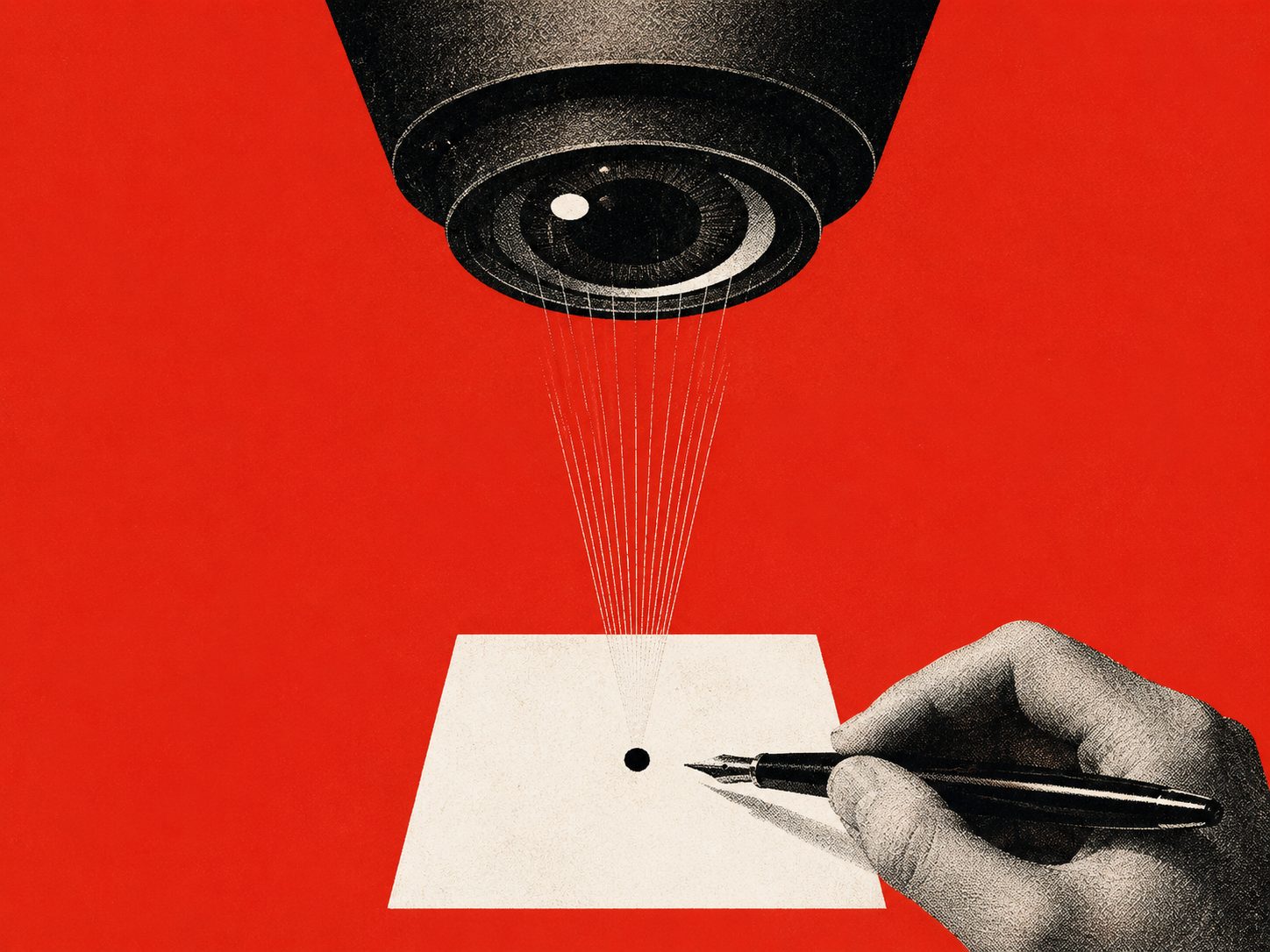
The information business is preparing for the wrong crisis. Faced with machines that can write endlessly and answer almost anything, news and information companies are bracing for decline as AI labs move into their territory.
They are missing the larger shift, and the larger opportunity.
Artificial Intelligence will make much of what the industry sells cheaper. It will also make the rarest work in the industry more valuable: finding what is original, proving it is true, and turning it into intelligence before everyone else knows to look.
The split is simple. There are two kinds of work in the information business. One is origination: being first to a fact about the world, finding what has newly become true, proving it at the source, and turning it into a signal someone can act on. The other is delivery: searching the recorded world, summarizing it, recombining it, and moving it back out in useful form. Origination puts a new true thing into the record; delivery moves what is already there. For a century the two were bundled and sold as one product. The originating half has a name: Original Intelligence (OI). It is the scarce half.
Artificial intelligence — the technology — is becoming extraordinary at the delivery half. It moves through the recorded world at a speed no newsroom can match, and it derives connections a person would never have the time to draw. What it cannot do is observe the world first. It cannot tell you what a filing said this morning if no one has written it down yet, cannot sit in the courtroom, cannot call the source, cannot be the one to notice the anomaly the instant it lands. Someone still has to make that first observation and put it into the record. Delivery, however brilliant, always runs on material that origination has already produced.
That is the divide AI is about to make visible. Origination is what the best newsrooms and information companies have always done. Delivery is what machines now do with the record after that work exists, and do better than any technology before them. The companies that win the next decade will be the ones that understand their origination is the scarce asset, and use AI to produce more of it than humans ever could by hand.
That is a claim about winners, and history is the place to test it. The same pattern has been repeating for a hundred and fifty years.
I. The lineageA hundred and fifty years of moving a signal
The Pony Express. Before the wire, distance was the enemy. A rider carried a letter across two thousand miles in ten days, and for a brief window that was the fastest information could move. The Pony Express solved for transport. The content was whatever fit in a saddlebag, and the value was arrival. The service lasted about eighteen months, and the transcontinental telegraph ended it almost overnight. A transport-only business dies the instant a better transmission layer arrives.
The Wire. The telegraph collapsed distance to near zero, and that changed what a message was worth. When everyone receives the same news at the same moment, the advantage shifts from transport to selection and speed. Paul Reuter started in 1850 by flying carrier pigeons across the one stretch of Europe the telegraph had not yet reached, to move stock prices faster than anyone else. When the wire closed that gap, he moved onto the wire. The business was never the pigeon or the cable. It was owning the fastest way to move a valuable signal.
The Terminal. By the late twentieth century the wire’s output had become overwhelming. There was too much to read and no way to act on it in context. RELX built on networked document delivery, FactSet on databases, Bloomberg on networked computing. The value moved again, from the feed to structured data, tools, and workflow. A terminal organized the world into fields you could interrogate, and put that intelligence where decisions were made.
The pattern, and the thing it was hiding. A rule runs through that lineage. Each dominant information company started narrow, with one slice of data, and rode an emerging technology to scale. And each shift moved the value one layer closer to the decision: transport, then selection, then structure and workflow.
The rule is easy to misread. It looks like the lesson is to own the transmission layer. It is the opposite. These companies won by owning whatever was scarce at the time, and scarcity does not stay put. Each transmission technology, once it spreads, stops being the bottleneck and becomes cheap infrastructure everyone has, and the advantage moves to the next hardest link.
So the honest question is not whether origination is scarce today — it plainly is — but whether it stays scarce, when the same law just commoditized transport, selection, and structure in turn. Here is why this link is different. Every layer that got cheap was a way of moving or organizing information that already existed; each was a technology, and technologies diffuse. Origination is not a technology. It is the act of first contact with the world — reading the primary record, judging what in it matters, calling the source, and putting a name behind the claim that it is real. That act does not diffuse, because there is no version of it that ends in software everyone can copy: it has to be performed again for every new fact, at the moment the fact appears. Delivery is a machine you build once and run forever. Origination is a cost you pay every single time. That is the one link the pattern cannot commoditize, because it is not an intermediary step that a better intermediary can replace — it is the entry point where information enters the record at all.
Through all of it, two kinds of work were bundled and priced as one. Every one of these businesses did original work — finding and verifying information — then wrapped it in a technology that carried it to the people who needed it. You never had to separate the value of the origination from the value of the delivery, because no technology had pulled them apart.
Artificial intelligence is the technology that finally does.
II. The splitWhat retrieval does, and what it can’t
To be fair, a model does more than look things up. It reasons, synthesizes, follows a chain of instructions, and recombines what it has read in ways no one bothered to before. That is real, and useful, and getting better every month. But at bottom it is still working the recorded past: it operates on what has already been written down.
Retrieval has a hard limit, and it is the structural kind, not a gap that scales away with the next model. A model works only with what has already been recorded, because it cannot observe the world directly. It cannot tell you what a regulatory filing said this morning if nobody has written about it yet. Give it two permits that are already filed and machine-readable and it will connect them well, often faster than a person. What it cannot do is surface the permit that is not in the record it can see: the one filed on paper in a county office no one has scraped, or the second filing that has not happened yet, or the anomaly that only means something to someone who called the source this morning. Someone has to observe that and write it down first. Retrieval always comes after that first act of origination.
It is worth answering the obvious objection here, because it sharpens the point rather than weakening it. Does AI not already do discovery: drug discovery, materials discovery, scientific discovery? It does, in one specific sense: it generates novel candidates by searching and recombining what is already known. A model can propose a molecule no chemist wrote down. But a proposed molecule is a hypothesis, not a fact. What makes it true is a clinical trial: someone dosing real patients and observing what happens in the world. The model cannot run the trial, and it cannot know the result until the result exists and has been recorded. That is the whole distinction in one example: AI is extraordinary at generating hypotheses from the record, and it still cannot originate the fact that settles them. Origination is that second act: first contact with a truth the record does not yet contain.
It helps to be precise about what in origination is automatable and what is not, because the honest version of the objection is that machines are starting to observe too. Sensors, satellites, and real-time filing feeds now make the first capture of raw events, cheaply and around the clock, and that part is a technology like any other: it diffuses, and it gets cheap. But raw capture is not origination. A satellite counts cars in a lot; it does not know the retailer is about to miss its quarter. A feed logs a filing the instant it posts; it does not know the buried clause changes the outcome. Origination is capture plus three things a sensor cannot supply on its own: deciding what is worth observing, structuring the raw signal into a fact with meaning, and verifying it well enough to put a name behind it. The alt-data industry already showed the shape of this: the sensor became a commodity and the margin moved to the judgment layer built on top of it. That layer is what does not diffuse. It is also why AI is leverage here rather than a threat: the machinery industrializes the capture and the scaffolding, which frees the scarce human judgment to be spent across far more facts than a newsroom could reach by hand. The cost per fact does not vanish. It moves up the stack, to the one link that was never a technology.
So AI, for all its power, sits on the delivery side of the old bundle, not the origination side. It is the most sophisticated packaging and query technology ever built, the terminal’s natural successor. And like every delivery technology before it, it needs something to deliver. It also moves the whole competition: the old advantage was comprehensiveness of the archive, and the new one is freshness: how fast a true thing enters the record and reaches a decision. That is a frontier retrieval cannot hold on its own.
III. The craftWhat information specialists actually do
The originating side of the bundle has a name and a craft. It is the work that produces Original Intelligence, and it belongs to information specialists: journalists and analysts trained to find what is new, prove what is true, and understand what it means before it is obvious.
An information specialist finds what is different. Out of a flood of filings, disclosures, permits, trial records, and transcripts that all look routine, the job is to spot the one that is not: the anomaly, the number that should not be there, the change in wording, the quiet update that alters the picture. Machines are good at flagging the outlier; that part is pattern-matching, and it keeps improving. The harder judgment is which outlier matters, which deviation is a story and which is noise. That call turns on knowing the domain and the stakes, and it is a different kind of work than detection.
An information specialist reaches the dots. A single record is rarely the story. The story appears when a filing is set beside a lawsuit, a permit, a hiring pattern, a registry update, or a disclosure posted somewhere else. It pays to be exact about what the machine already does well: a model can join records that sit in front of it, and often finds links a person would miss. The edge that stays human is not the joining. It is getting the dot that is not yet online, not yet filed, not yet written down, so that there is something new to connect at all. The best connections are the freshest, and the freshest have to be gone and found.
An information specialist thinks about implications. Knowing what happened is only the beginning. The value is in reasoning forward: if this is true, what does it change, who does it affect, and what does it signal before the market, the public, or the institution has absorbed it?
Put those three together and something important appears. Original Intelligence is not only a talent. It is a procedure. A good journalist or analyst does not simply know things. They know the steps. Faced with a question, they know which records to pull, in what order to cross-reference them, and how to weigh what each source says against the others.
That ordered sequence of triangulation is the real engine of OI. Call it the human algorithm: the part a model can run once it has been written down, but cannot supply on its own.
Here is what that looks like in practice. Suppose the question is whether an already approved drug could treat a disease it was never designed for — the kind of overlooked opportunity that never becomes news because no company has a reason to chase it. An expert does not answer by looking it up. They run a sequence.
None of that is retrieval. It is origination, synthesis, and judgment applied to what is happening now. A model can assist every part of it, but pointed at the world alone it can only report what has already been recorded. Being first to see what changed is a different job, and it is the one that pays.
IV. The playbookWhat the OI company builds
So here is the strategic mistake, stated plainly: faced with AI, most information companies are asking how to become an AI company. That is the wrong question. The winning move is not to become an AI company; it is to become an OI company, and to pick up AI as the tool that makes it possible. The distinction is everything. An AI company competes on the delivery layer, against the best-funded firms on earth. An OI company competes on the one thing those firms cannot manufacture: verified origination, a true thing found first.
This is not theory. It is what we built AppliedXL to do, and a template any OI company can follow. We use AI heavily, the way a newsroom once used the printing press — as the machinery that lets a small team work at a scale that would otherwise be impossible. But the product is not a repackaging of what exists. The product is new information. AI is the tool. OI is the product.
We extract structured intelligence from public institutional records — the filings, clinical results, permits, and registries where market-moving signals surface before they become news. Our systems read them, find what is different, connect what has not been connected, and reason about what it implies. The result ships as one of four things: a signal, an indicator, a forecast, or a resolution record.
The rigor is journalistic, not merely algorithmic. Outputs are validated against source records, checked for provenance, and reviewed by human analysts before they ship, because speed without verification is only noise. OI is editorial work with verification built in from the start, not a data pipeline with a check bolted on at the end.
V. DeliveryRebuilt for the agent era
OI is only half the product. The other half is getting it to a decision in the form the decision needs — the problem every era of this history was really solving. This is the half everyone else is also racing to build, and that is exactly the point: delivery is where you compete against the whole field, so it is table stakes, not a differentiator. You still have to do it excellently. You just cannot win on it alone.
What has genuinely changed is who receives the intelligence. For a century delivery meant formatting a signal for a person to read. In the agent era the reader is increasingly another model: a system that queries, cross-references, and acts without a human reading the page at all. That inverts the design. Delivery rebuilt for agents is not a cleaner interface; it is structured, source-linked, and directly queryable, so a machine can consume the signal and trace it back to the record it came from. We build it two ways at once.
VI. The pricesFree content, priced intelligence
For most of history you could not buy origination and delivery separately, so nobody asked which one they were paying for. AI has pulled them apart, and priced each at an opposite extreme.
Commodity content is heading toward free. A model generates unlimited amounts of it, and the cost of one more article, summary, or explainer is falling toward zero. Not all of it collapses at the same rate (distinctive reporting and trusted brands still hold subscription value), but the vast undifferentiated middle does, and it is that middle most attention businesses were built on. For anything selling attention against that layer, the ground is giving way, and you cannot charge for, or advertise against, what the reader gets for nothing. The same erosion reaches the raw-information layer beneath it: as models ingest and reproduce the value of open and licensed content, raw information stops being defensible, and durable value migrates to structured, domain-specific, decision-grade intelligence that drives a customer’s revenue, not to the content itself.
Intelligence has not moved the same way. It still commands high prices, because it is a different product: a structured, verified signal a professional pays for because it drives a decision with money on the other side. A portfolio manager does not want more content. They want the one thing that changes what they do next, in a form they can act on and trust.
The fair objection is that AI will not stop at content. It will get cheap for the part that is really retrieval and formatting. The scarce core is different. What a professional pays a premium for is not the packaging of a signal but the assurance that it is real: that someone with domain expertise found it in the primary record, verified it, and put their name on it. As content collapses in price, the assurance does not. It becomes the product. And it attaches to a specific class of material: signals structured from primary institutional records — regulatory filings, court documents, permits, registries — before they surface as news. That is not trivially replicable by ingesting the open web, which is exactly why it survives the repricing while commodity information does not.
The money makes the imbalance stark.
VII. The inflectionWhat survives when the bundle splits
The essay’s central claim has a sharp consequence for the companies that dominate professional information, and it is not the one usually drawn. The usual claim is that they are exposed. The more precise claim is that their old bundle is being split into its two halves, and the two halves are moving in opposite directions at once. One half is losing its scarcity. The other is becoming the scarcest asset in the industry. Everything depends on which half a company decides it is in.
The half that is losing scarcity is the stored past. The durable advantage used to be the archive, a structured record accumulated over decades. That record is now something an AI-native competitor can license and cross in a single acquisition. But note precisely what commoditizes, because it is narrower than it first appears. What gets cheap is the warehouse of already-recorded facts. What does not get cheap is the act this essay has been describing throughout: first contact with a fact the record does not yet contain, the reading of the primary stream as it is written, the judgment of what in it matters, the name placed behind the claim that it is real. The archive was delivery, frozen. Origination is the live version, and it does not sit in the warehouse that just lost its value.
That is the split, and it lands on the incumbent as a live capability, not a stored one. The frontier moves from how complete your history is to how fresh your signal is, and freshness is not something you own, it is something you perform, every time, at the moment the fact appears. The organizations built to optimize comprehensiveness of the record now find the competition has moved to a link they treated as a cost: the standing apparatus for primary observation.
One half is losing its scarcity. The other is becoming the scarcest asset in the industry.
Which is exactly why the surviving half belongs to them more than to anyone else. Two things survive the split, and the established players hold both. The first is the customer: the installed base and the distribution, the accounts already won, the reach a new entrant would spend a decade building. The second is access to the primary record itself, not the historical pile but the standing right, and the pipes, to keep reading regulatory filings, court documents, permits, and registries the moment they are written. That live access is the one input origination cannot proceed without, and it is not replicable by ingesting the open web. As the stored past loses its value, the feed that produces new facts keeps it.
Put those together and the incumbent’s position resolves into a single, specific asymmetry. The hard half to build is the intelligence layer, because it requires the editorial discipline, the domain mapping, and the standing presence at the source that this essay has argued do not diffuse into software. Better tooling narrows the skill gap over time; it never hands a competitor the credentials and the right to be first at the record. The easy half to build is reach, and the incumbent already has it. So the two halves need each other precisely, and asymmetrically: the layer needs the distribution to reach a market, and the distribution needs the layer to have anything scarce left to sell. That is the logic behind why the companies that have built the origination layer tend to be partnered with rather than competed away, and it is a logic we describe from inside it, having built our own partnerships around it, rather than as detached observation.
None of this forces a particular path. An incumbent can assemble a version in-house, license from several vendors, or wait for the capability to commoditize. But origination is the one link the essay has shown does not commoditize, so waiting for it to is waiting for the thing that will not come, while the freshest signal in each domain is claimed by whoever moves first. The seat is per-domain, and it is filled once.
Print monetized distribution. Digital monetized data. Social monetized attention. The next era will not monetize information at all. It will pay for producing it.
VIII. The movesTwo moves that compound
Build B2B products. Sell structured intelligence to the professionals who will pay for it, instead of selling advertising against content that is increasingly free. The reader economy is being commoditized by the same models flooding it. The professional economy is not, because a professional buys a decision, not a page view.
Monetize data with AI. Most established information organizations already sit on something rare: a body of records they have the authority to read, gather, or produce. That material used to sit idle, too vast to turn into product economically. AI changes the math — turning a cost center into a franchise. The winners are not the ones with the most data — a thirty-year archive that once took decades to build can now be licensed and crossed in a single acquisition, so ownership alone no longer protects anyone. They are the ones that execute intelligence on the data they already have the right to.
Together these mark the real shift: the advantage of information companies is moving from data ownership to intelligence execution. Anyone can run a record through a model. Turning that into a signal a professional will stake a decision on is the hard part, and the part that compounds. Execution is the new ownership.
IX. The fieldEveryone is converging on delivery
Look across the market for professional information and the convergence is striking. Very different companies are all racing to build the same thing: the best AI-driven way to find, query, and reason over information. AI companies are building workflow tools for specific professions. Established information companies are putting AI in front of their own data. Newer entrants compete on cloud-native, AI-driven search.
This is not a story of winners and losers among them. Each is competing to be the best way to retrieve and reason over information — the delivery layer — and each is only as valuable as the Original Intelligence flowing into it. As the market fills with excellent, competing delivery surfaces, the layer that grows scarcer is the one beneath them all.
Everyone is racing to build the pipes. The water is what gets rare.
X. The choiceIn front of every OI company
News organizations and information companies are the original OI companies. They have spent decades — some more than a century — building the one thing AI cannot manufacture: the ability to find what is true and new and turn it into something a person can act on. That capability is about to become the scarcest asset in the information economy. And too many of the companies that own it are spending this moment on defense.
The mistake is not adopting AI. The mistake is adopting it as a cost-cutter and a content machine, aimed at producing more of the cheap thing, when the opportunity is to aim it at the expensive thing: producing more Original Intelligence than a newsroom ever could by hand. Point the most powerful tool ever built at the one product it cannot replace, and you do not get disrupted. You get leverage.
And the part that should change the calculation is how little the winning move actually requires. It does not mean building an AI lab or out-engineering the frontier model companies. The hard, compounding part was never the technology. It was the editorial judgment, the verification, and the trust that comes from a name attached to being right, and those are the assets the incumbent already owns and a new entrant cannot buy. The machinery that turns them into intelligence at scale now exists, and it can be assembled.
So the choice is narrower than it looks, and it does not stay open. Every domain has a primary record and a first mover who claims it. In each one, the intelligence layer gets built once, on top of whoever holds the sources and moves first, and everyone who arrives after buys access to a seat someone else is already sitting in. That is not a forecast. It is already happening, vertical by vertical, while the incumbents best positioned to win them debate whether the shift is real.
The machines can retrieve the truth now, cheaply and well, and they will only get better at it. What they cannot do is produce it. That work is yours. The only question left is whether you point your tools at the cheap half or the scarce one, and there is a clock on the answer.
See what the platform reads before it becomes news.
Source-linked intelligence across regulated markets, scoped to your domain.